
 English


Wild fruits for picking in the autumn
Exotic Plants or Native Plants? Although exotic plants may seem very attractive to most people, we believe that nature has provided us with enough valuable natural resources in Romania. And if we have access to high-quality ingredients with therapeutic effects…
Summary:
Hodaia promotes the use of native plants in 100% natural products for health and beauty, using local ingredients and recyclable packaging. The team responsibly harvests wild fruits and medicinal plants, and the resulting products can be used both cosmetically and as food. Hodaia’s projects include a botanical garden and a living museum of traditional pharmacy, and the community can contribute through volunteering, donations, or purchases.
Contents:
- Exotic Plants or Native Plants?
- Wild Fruits to Harvest in Autumn
- Cornelian Cherry
- Hawthorn
- Sloe (Blackthorn)
- Rosehip
- The Hodaia Ecosystem and How You Can Get Involved
Exotic Plants or Native Plants?
Although exotic plants may seem very attractive to most people, we believe that nature has provided us with plenty of valuable natural resources in Romania. And if we have access to high-quality ingredients with extraordinary therapeutic effects nearby, why would we travel around the world to obtain them?
One of Hodaia’s missions is to familiarize people with as many native aromatic and medicinal plants as possible. For this purpose, we created the Herbalist’s Workshop—the spice pantry of natural ingredients—where all ingredients are carefully selected by us and harmoniously combined to create magical elixirs and potions, 100% natural, under the Hodaia brand. You can now easily learn about the over 30 regional plants with therapeutic effects that we use in creating Hodaia products.
Additionally, at the request of some clients, we have started welcoming them to the Hodaia homestead to show the plants in person, teach them how to harvest, and how to use them properly. We even host students from abroad, organize excursions, and hold courses on botany, medicinal plants, and ecology. On top of that, Hodaia organizes or participates in workshops where attendees learn to make their own body care products.
It’s important to note that each plant and ingredient we include in Hodaia products has multiple benefits for human health, and we choose them based on their exceptional therapeutic effects on all types of skin and hair. Hodaia products are so natural that you could even eat them, putting into practice the saying: “Don’t put on your skin anything you couldn’t eat!” Hodaia products
Wild Fruits to Harvest in Autumn
One of the principles we apply at Hodaia is “you help nature by not harming it,” so we only harvest from areas where plants are abundant. We venture far from cities and busy roads, into cleaner, less polluted locations. Harvesting plants can mean hours, sometimes days, with a backpack and a basket, searching for them.
In October and November, we go into the wild to collect small, colorful fruits that have major health benefits, including cornelian cherries, hawthorn, sloe, and the well-known rosehips. Autumn-winter forest fruits delight the eye with colors ranging from intense red to ink-blue. Besides beautifying the autumn-winter landscape, these fruits feed wild birds. They nourish, revitalize, and strengthen us humans as well, if we know how to harvest and consume them correctly.
Cornelian Cherry
This plant is particularly beautiful and easily recognized by its long, red fruits, about 2 cm in size. Cornelian cherries have a sweet-astringent taste and countless therapeutic virtues, especially when used fresh. They can also be prepared as jams, syrups, compotes, or even wine, and as phytopharmaceutical preparations such as decoctions or tinctures.
The fruits can also be dried for use throughout the cold season. Cornelian cherries are mainly recommended for digestive disorders: gastritis, gastric ulcers, dyspepsia, esophagitis, diverticulosis, regurgitation, colic, bloating, flatulence, diarrhea, and digestive bleeding. They are very rich in vitamin C, making them a powerful antioxidant and immune booster.
Hawthorn
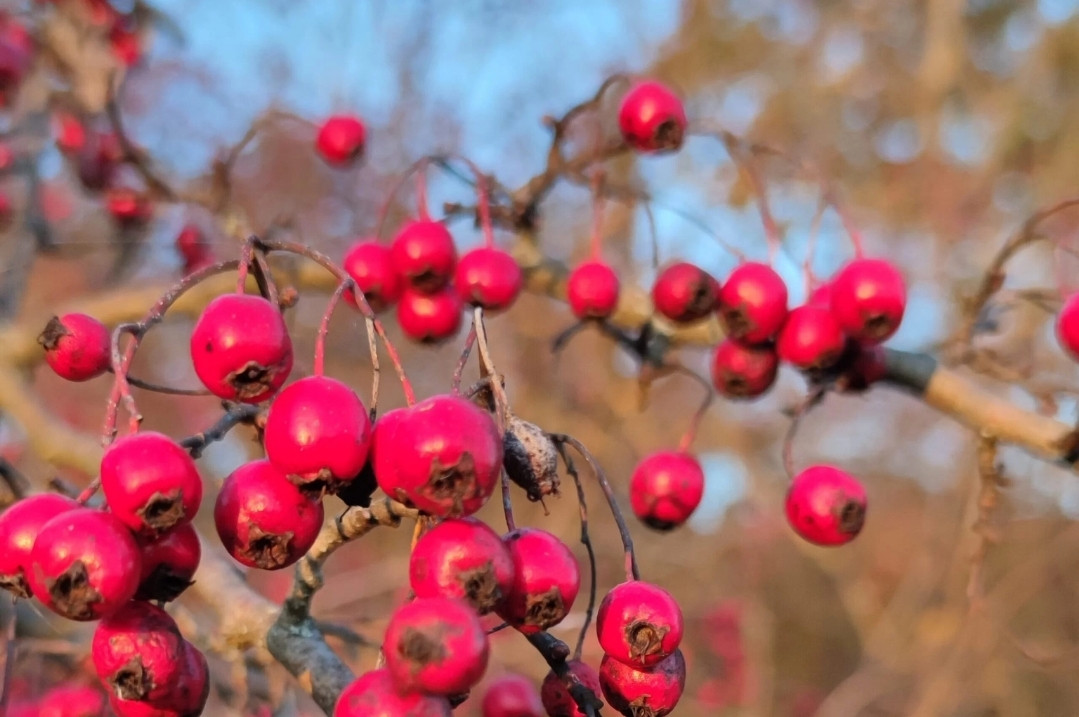
Hawthorn is a native plant, also with small red fruits, which should be harvested before frost (opposite to rosehips, which are harvested after frost). Its active compounds have regenerative effects on the heart, making it the best natural treatment for hypertension.
Hawthorn supports heart function, improves blood circulation, tones coronary vessel walls, and limits the harmful effects of free radicals on the heart. The berries are not consumed raw, mainly used for jams. For teas or tinctures for heart issues, the flowers are used. Hawthorn is also effective for obesity, anemia, low immunity, anxiety, and fatigue. Its vitamin C content and antioxidant properties should not be overlooked.
Sloe (Blackthorn)
Sloe is visually striking, especially when coloring the pristine winter landscape. Easily recognizable by its round, dark blue fruits resembling blueberries, sloe is as versatile as rosehips. The fruits are rich in vitamin C and flavonoids, making them recommended for cancer prevention, vascular regeneration, metabolism improvement, and they have a diuretic effect.
Rosehip
Rosehip is well-known as a medicinal plant throughout Romania. The fruits are small, slightly elongated, shiny red, and absolutely delicious. Due to their high content of vitamins A, B1, B2, K, and C, rosehips have always been considered true immune system soldiers. They also contain citric and malic acids, flavonoids, beta-carotene, sugars, lecithin, pectin, tannins, volatile oils, and minerals (calcium, iron, magnesium, phosphorus, potassium, selenium, and zinc)—active substances that help form antibodies to fight infections and diseases.
Rosehips can be consumed as tea, syrup, or the famous rosehip jam, a staple in Romanian pantries. Rosehip tea is recommended not only against colds but also arthritis. The fruits are used to stimulate appetite, combat fatigue, aid calcium absorption, accelerate healing of inflammations, regulate intestinal transit, and more.
The Hodaia Ecosystem and How You Can Get Involved
At Hodaia, we are developing an ecosystem around the rural space and the plants we love, where everyone can contribute in a way that suits them. We enjoy sharing the knowledge accumulated over years of study, applying it in all our projects.
Creating a botanical garden with medicinal plants found in Romania is one of our passion projects, which we began working on in the summer of 2022.
A second non-profit project is establishing a Living Museum of Pharmacy and Traditional Medicine, whose exhibits will be used in workshops and courses led by Raluca Olaru, Hodaia’s founder.
These projects require significant energy, time, and money, so we offer a few ways you can get involved through a simple message via email or Facebook:
- Volunteering: we need hardworking hands to help in the garden during a weekend at the countryside.
- Donations: if you have old medical or pharmacy items and wish to see them come to life again in the living museum, we gladly accept your donations.
- Purchases from the Hodaia pantry: with each product you buy, you help fund the restoration of the barn that will house the museum.
- Any help, big or small, will be rewarded in the best way we know: we prepare teas and other treats for you to enjoy with your loved ones.