

 English


Seborrheic Dermatitis: Causes, Symptoms, and Natural Remedies from Romania’s Flora
Learn more about seborrheic dermatitis and plants from Romania: natural, simple, and effective remedies for healthy skin.
Seborrheic dermatitis is a common skin condition, appearing mainly on the scalp, but also on the face or other areas rich in sebaceous glands. It is not a serious disease, but it can be bothersome due to itching, redness, and flaking. The good news is that besides dermatological treatments recommended by doctors, there are also other methods. Learn more about seborrheic dermatitis and the plants from Romania’s flora that can support gentle and effective skin care.
Summary:
Seborrheic dermatitis has no definitive cure but can be controlled. Natural remedies from Romania’s flora – such as marigold, chamomile, yarrow, greater celandine, oak bark, and comfrey – can successfully complement medical care. With patience and consistency, these plants help the skin regain balance and comfort.
Contents:
- What is Seborrheic Dermatitis?
- Common Symptoms
- Seborrheic Dermatitis and Useful Romanian Plants
- Usage Recommendations
- Daily Skin Care
What is Seborrheic Dermatitis?
Seborrheic dermatitis is a chronic inflammation of the skin, associated with excessive sebum production and the presence of the fungus Malassezia. Factors that favor its appearance include stress, fatigue, seasonal changes, and genetic predisposition.
Common Symptoms
- White or yellowish flakes on the scalp, eyebrows, or around the nose;
- Redness and irritation;
- Persistent itching;
- Aesthetic and psychological discomfort.
Seborrheic Dermatitis and Useful Romanian Plants
Seborrheic dermatitis can be treated alongside doctor-prescribed medications with plants from Romania’s flora, such as:
- Marigold (Calendula officinalis) – anti-inflammatory and healing. Marigold infusion can be used for compresses or scalp rinses.
- Chamomile (Matricaria chamomilla) – soothes irritation and reduces itching. Used as a tea applied locally.
- Yarrow (Achillea millefolium) – antiseptic and anti-inflammatory, useful in washes or compresses.
- Greater Celandine (Chelidonium majus) – antifungal effect. Applied externally, spot-wise, with caution.
- Oak Bark (Quercus robur) – astringent decoction reduces sebum secretion, useful for rinsing the scalp.
- Comfrey (Symphytum officinale) – promotes tissue regeneration and reduces inflammation. Effective as ointment or macerate applied locally.
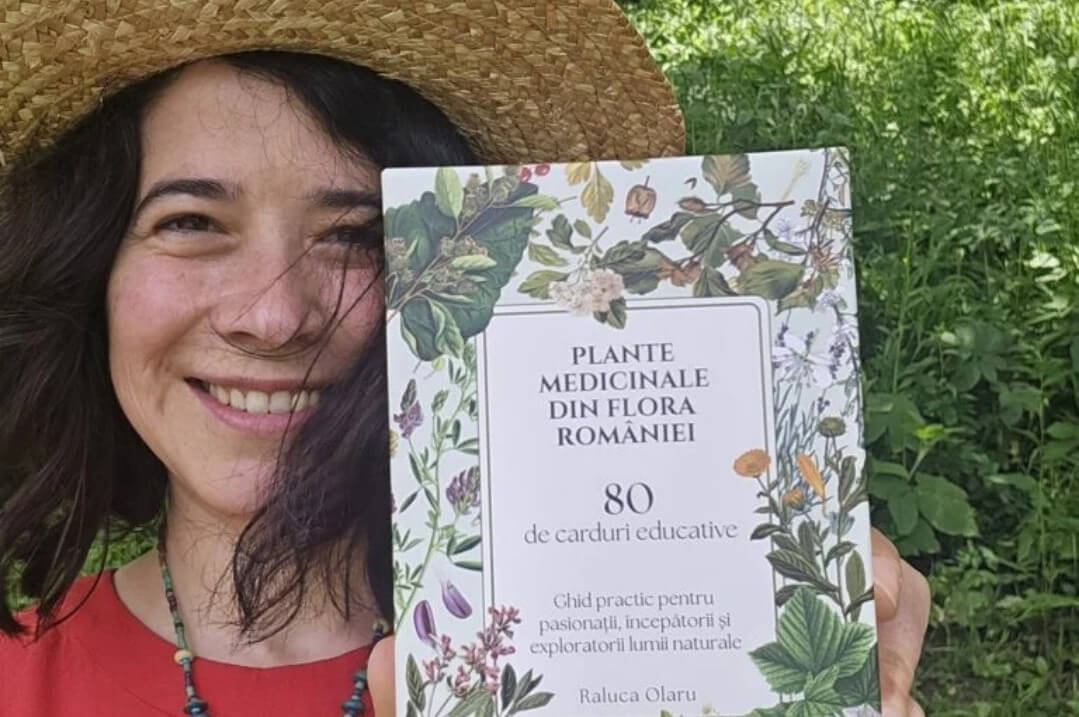
For more information on Romanian flora and how to use these plants, check out the educational set of 80 Romanian plant cards from Hodaia.
Usage Recommendations
- Rinse the scalp with chamomile or marigold infusions after washing.
- Pat affected areas with oak bark decoction.
- Apply ointments based on comfrey or marigold.
- Use these plants consistently, as their effects appear gradually.
Daily Skin Care
In addition to medicinal plants, it is important to maintain a balanced lifestyle:
- Reduce stress and ensure adequate rest;
- Avoid harsh cosmetic products with high alcohol content or synthetic fragrances;
- Adopt a diet rich in B vitamins, zinc, and omega-3 fatty acids.
If you struggle with seborrheic dermatitis, you can also try the Regenerating Balm. This natural solution for dry and sensitive skin combines medicinal plant extracts and cold-pressed oils to hydrate and regenerate the skin in depth. Suitable for all skin types, including delicate baby skin.